
Most drivers know tires do not last forever. Still, a lot of people wait too long before replacing them. It is easy to put it off, especially if the car still feels fine on short drives. But worn or aging tires can become a real safety problem long before they go completely flat.
If you are wondering when to replace tires, the answer usually comes down to three main things: tread depth, visible damage like dry rot or cracking, and the age of the tires. All three matter. Sometimes a tire may still have usable tread, but its rubber is already too old or damaged to trust.
Tread Depth Matters More Than People Think
Tread is what helps your tires grip the road. It pushes water away, improves traction, and helps your car stop more safely. As the tread wears down, the tire becomes less effective, especially in rain.
A tire with low tread depth may still look okay at a glance, but it can lose grip much faster during hard braking or wet conditions. That is when hydroplaning becomes a bigger risk.
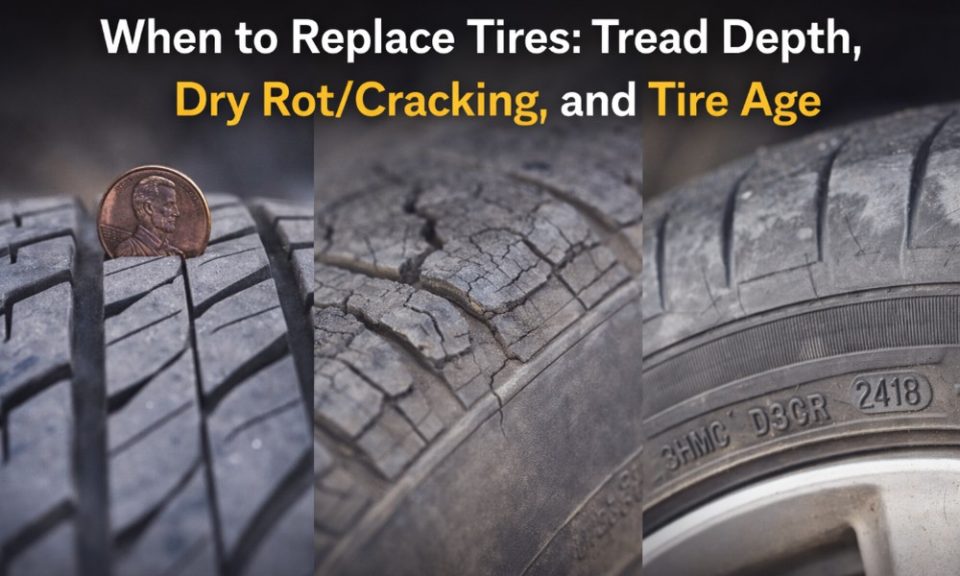
Many people use the penny test for a quick check. Place a penny into the tread with Lincoln’s head facing down. If you can see the top of his head, the tread is getting too low and it is probably time to replace the tire. It is a simple test, though not perfect. A tread depth gauge is more accurate.
Even before the tread becomes legally worn out, performance can start to drop. That is why some drivers replace tires a little earlier, especially if they drive often in rain or highway traffic.
Watch for Dry Rot and Sidewall Cracking
Tread is not the only thing to look at. The condition of the rubber matters too. Tires can dry out over time, even if the car is not driven much.
Dry rot usually shows up as small cracks in the sidewall or between the tread blocks. At first, the cracks may seem minor. But they can grow, and that weakens the tire structure. Heat, sun exposure, sitting too long, and harsh weather can all speed this up.
This is one of those things people miss because the tire may still hold air and look mostly normal from a distance. But cracking is not just cosmetic. It can be a warning sign that the rubber is aging and losing flexibility.
If you notice:
- Cracks in the sidewall
- Cracks between tread sections
- Fading, brittle-looking rubber
- Chunks or pieces missing
then the tire should be inspected closely, and replacement may be the safest move.
Tire Age Is a Big Deal Too
A tire can age out even if it still has plenty of tread. That surprises some people, but it makes sense. Rubber breaks down over time whether you drive on it or not.
Older tires may look decent, but the compounds inside the tire can harden and weaken. That affects grip, ride quality, and safety. It also increases the chance of failure, especially during hot weather or long drives.
A lot of drivers forget to check the age because they only focus on wear. But if the tires have been on the vehicle for many years, or sat in storage for too long before installation, age becomes important.
You can check the tire’s age by looking at the DOT code on the sidewall. The last four digits show the week and year the tire was made. For example, a code ending in 2421 means the tire was manufactured in the 24th week of 2021.
Even if the tread still looks usable, an older tire may no longer be the safest option.
Other Signs It May Be Time for New Tires
Besides tread depth, cracking, and age, there are a few other warning signs that should not be ignored. These include uneven wear, frequent loss of air pressure, vibration while driving, or visible bulges in the sidewall.
Those issues may point to damage, poor alignment, or internal tire problems. Sometimes the tire can be repaired, but sometimes replacement is the better answer.
Final Thoughts
Knowing when to replace tires is about more than waiting for them to go flat or look obviously worn out. Tread depth affects traction. Dry rot and cracking weaken the rubber. Tire age matters even when the tread still seems fine.
A healthy tire helps your car stop better, handle better, and stay safer in changing road conditions. If you see wear, cracking, or signs of age, it is probably worth acting sooner rather than later. Tires are easy to ignore until something goes wrong. That is kind of the problem.
This post was written by a professional at Tires2Go Florida. Tires2Go Florida is a trusted automotive service center located in Pinellas Park, Florida, serving drivers across St. Petersburg, Tampa, Clearwater, and Largo. Our certified mechanic Tampa handle tire and wheel replacement, brakes in Pinellas Park, suspension repairs, oil changes, wheel alignments, tire balancing, and road force balancing. We also specialize in ADAS calibration, suspension modifications, lift kits, and lowering kits using quality parts and modern diagnostic equipment. From routine maintenance to advanced automotive services, Tires2Go Florida provides dependable solutions and tires for sale for vehicles throughout the Tampa Bay area.
