
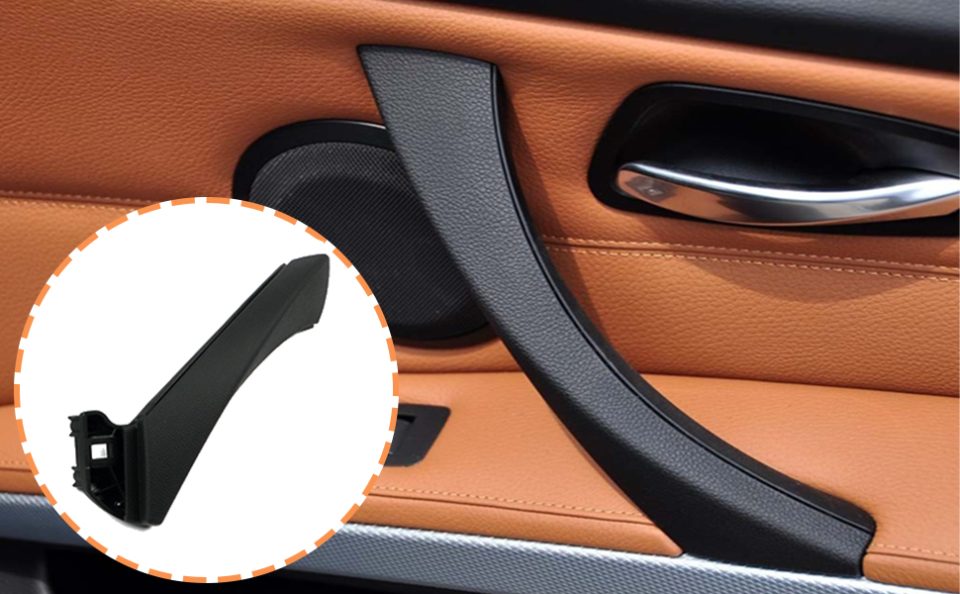
BMW automobiles are celebrated for construction precision and vital performance, but individual area that has disappointed owners for years is the reliability of their door handles. From E-series models of the early 2000s to the new G-series program, many BMWs share a history of exterior and interior door handle failures.
Understanding why BMW door handles break, how the design has developed, and what symptoms to expect can help owners counter costly repair surprises and technicians for Auto Repair in Hillsboro, OR determine recurring questions more accurately.
The Core Problem: Lightweight Materials Under Heavy Stress
BMW uses an association of plastic, thin mineral levers, and lightweight carriers to reduce pressure and improve adeptness. While this helps performance, it further means:
- Door handle carriers are thinner than those of many opponents
- Plastic actuator pieces wear out faster
- Stresses from daily use grow quickly
F-Series Issues: Improved Materials but New Failure Patterns
With the F10, F30, F25, and F15 families, BMW improved the substance of certain elements, but new issues appeared.
-
Exterior Handle “Springback” Failure
F-series handles often fail to return to their resting position. This is caused by:
- Weak within return springs
- Worn hinge bushings
- Stretched cables
When the handle sticks outward, the door may not lock or start the comfort-access machine properly.
-
Comfort Access Stress
F-series BMWs popularized passive-entry door handles with included sensors. These electronic modules increase weight and demand more robust housings. Unfortunately, the fundamental carrier wasn’t improved enough, leading to:
- Loose handles
- Cracked carriers
- Sensor damage during usual pulls
You can also consult with experts like G and D Automotive.
G-Series Problems: Stronger Handles, More Electronics
BMW’s new G20, G30, G05, G14, and G80 models feature sleeker, more robust door handles. But while mechanical disappointments have decreased, new questions have emerged on account of increasing electronic integration.
-
Built-In Sensors and Electronics Add Complexity
G-series handles involve:
- Proximity sensors
- Capacitive touch pads
- Comfort access modules
- LED ignition
More components mean more promising failure points. A broken sensor or damaged circuitry harness can cause the handle to malfunction even though the mechanical parts are fine.
-
Tighter Tolerances = More Stress
The new flush-style design requires closer fitment. Even slight misalignment can strain:
- Internal clips
- Carrier mounting points
- The handle hinge
This creates the assembly susceptible to stress fractures if the door is opened excessively or slammed.
-
Harsh Weather Sensitivity
Cold climates cause the soft-touch materials on G-series handles to harden, making them more resistant to cracking under unexpected force.
Conclusion
BMW’s door handle missteps across E, F, and G series vehicles reflect the best engineering principles of prioritizing lightweight elements and complex mechanisms. Understanding the design imperfections behind these issues by experts like G and D Automotive helps owners respond quickly, and technicians label the root cause instead of blindly replacing parts.
