
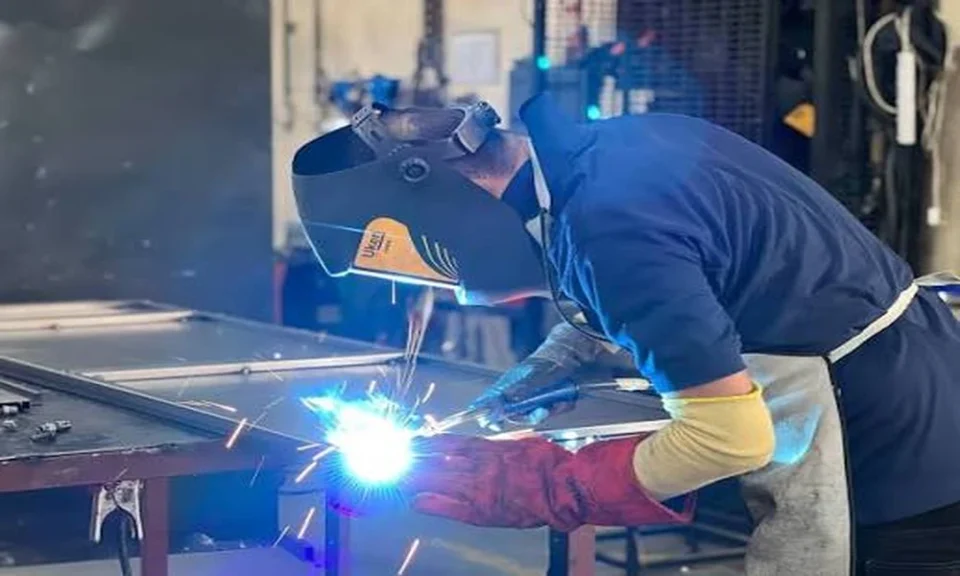
Welding joins metal by melting the material at the joint so that it fuses on cooling, and it remains the dominant method for creating permanent, load-bearing connections in fabricated assemblies. In sheet metal work the challenge is distinctive: the material is thin, so the heat that makes the joint possible is also the force that distorts the part. For engineers, designers, and procurement specialists, welding decisions influence not only joint strength but also dimensional accuracy, corrosion behaviour, and the cost of every downstream operation.
This guide explains the main welding processes used on sheet metal, how joint design shapes the result, why distortion happens and how it is controlled, and the quality considerations that determine whether a weld holds up in service. The perspective is neutral and practical, intended for readers specifying or evaluating welded components.
The Main Welding Processes for Sheet Metal
Several welding processes suit thin material, and each occupies a distinct niche. Choosing among them is a matter of matching the process to the joint’s requirements rather than to equipment availability.
Resistance Spot Welding
Spot welding passes a high current through overlapping sheets held between electrodes, generating localised heat that fuses the material at discrete points. It is fast, highly repeatable, easily automated, and introduces relatively little heat into the surrounding material, which is why it dominates high-volume sheet assembly. Its limitation is inherent in its nature: it produces discrete joints rather than a continuous seam, so it cannot seal a joint and distributes load through individual nuggets rather than along a line.
Gas Metal Arc Welding
Gas metal arc welding feeds a consumable wire electrode through a shielding gas, producing a continuous seam at high deposition rates. It is versatile and productive, suiting joints that require continuous strength or sealing. On thin sheet it demands careful control, since the heat input can readily distort or burn through the material.
Gas Tungsten Arc Welding
Gas tungsten arc welding uses a non-consumable tungsten electrode under a shielding gas, giving the operator fine control over heat input and producing high-quality, clean welds. It is slower and more demanding than other arc processes, so it tends to be reserved for thin material, critical joints, and applications where weld appearance and integrity matter more than throughput.
Laser Welding
Laser welding uses a focused beam to create a narrow, deep weld with a very small heat-affected zone. The concentrated energy means minimal distortion and high speed, though it requires precise part fit-up and carries higher equipment cost. It suits high-volume applications where distortion control is paramount.
Matching the Process to the Joint
The most consequential welding decision is choosing a process that suits the joint’s actual load case rather than the equipment that happens to be free. Two errors recur, and both are expensive.
The first is using spot welds on a joint that genuinely needs a continuous seam. Where a joint must seal against fluid or gas, or must carry load continuously along its length, discrete welds will leak or fatigue prematurely at the points between nuggets. The second is applying continuous arc welding to a joint designed for spot welds, which introduces unnecessary heat, distortion, and cost without any functional gain.
The question to ask of any joint is what it must actually do: carry load at discrete points, carry it continuously, seal, or simply locate parts relative to one another. The answer usually points clearly to a process. Readers examining how welding integrates with cutting and forming in a production environment can consult a practical reference on welding within an integrated fabrication workflow.
Joint Design Determines What Is Achievable
A weld can only be as good as the joint presented to it, and joint design is where welding quality is largely decided.
- Joint type: lap joints suit spot welding and overlapping sheet; butt joints suit continuous seams but demand accurate edge preparation and fit-up.
- Access: the welding head or electrodes must physically reach the joint, and inaccessible joints are a common late-stage design discovery.
- Fit-up: gaps between parts force higher heat input to bridge them, increasing distortion and weakening the joint. Consistent fit-up from accurate cutting and forming is a prerequisite for good welds.
- Weld quantity and placement: more welds are not automatically better. Each adds heat, cost, and distortion, so welds should be placed where the load actually requires them.
Joint design also connects backward to earlier stages. Poor fit-up usually originates in cutting or forming variation, not in welding, which is why welding problems so often turn out to be upstream problems in disguise.
Distortion: The Central Problem in Sheet Metal Welding
Distortion is the defining challenge of welding thin material. Heat causes the metal to expand locally, and as the weld cools, it contracts. Because the surrounding cold material restrains this movement, the result is residual stress and permanent deformation: warping, bowing, or twisting that no amount of good welding technique fully eliminates.
Thin sheet is especially vulnerable because it has little stiffness to resist these forces. The practical approaches to controlling distortion are well established:
- Minimise heat input: use the lowest heat that produces a sound weld, and choose processes with concentrated energy where distortion control matters.
- Reduce weld volume: avoid over-welding, since every unnecessary weld adds heat and shrinkage.
- Use fixturing: hold parts rigidly during welding and cooling so they cannot move as the weld contracts.
- Sequence welds thoughtfully: alternate or balance welds across the part rather than working continuously in one direction, so shrinkage forces offset one another.
- Consider intermittent welds: where continuous strength is not required, staggered welds deliver adequate strength with far less heat.
The reason spot welding dominates high-volume sheet assembly becomes clear in this light: its localised, brief heat input produces far less distortion than a continuous arc seam would across the same structure.
Material Considerations
Weldability varies considerably between materials, and it interacts with the lightweighting trend reshaping many industries. Mild steel welds readily by most processes. Higher-strength steels can suffer reduced properties in the heat-affected zone, where the thermal cycle alters the microstructure the steel’s strength depends on. Stainless steel welds well but has high thermal expansion, making it particularly prone to distortion. Aluminum presents a different set of difficulties: its oxide layer, high thermal conductivity, and behaviour under resistance welding mean conventional steel spot welding often transfers poorly, and adapted processes, mechanical fastening, or adhesive bonding may be needed instead.
The practical consequence is that material and joining method must be chosen together. Selecting an aluminum alloy for weight reduction without confirming how it will be joined is a decision that frequently returns as a problem later in the program.
Weld Quality and Inspection
Common weld defects include porosity, where gas is trapped in the solidifying weld, lack of fusion where the weld fails to bond properly to the base material, undercut at the weld toe that creates a stress concentration, and burn-through on thin sheet from excessive heat. Most trace back to parameter settings, contamination, or poor fit-up rather than to the process itself.
Inspection ranges from visual examination, which catches many surface defects, through destructive testing of sample joints, to non-destructive methods for critical applications. As with fabrication generally, quality is more reliably achieved through process control, maintaining consistent parameters, clean material, and good fit-up, than through inspecting defects out at the end.
Common Mistakes to Avoid
- Selecting a welding process based on equipment availability rather than the joint’s actual load case.
- Over-welding, adding heat, cost, and distortion without functional benefit.
- Accepting poor fit-up and compensating with higher heat input.
- Designing joints that the welding head or electrodes cannot physically reach.
- Choosing a material for weight or cost without confirming how it will be joined.
- Treating distortion as a welding-shop problem rather than designing for it from the outset.
Heat Is the Constraint That Shapes Everything
Welding in sheet metal is governed by a single unavoidable tension: the heat that creates the joint is the same heat that distorts the part. Every meaningful decision, process selection, joint design, weld placement, fixturing, and sequence, is ultimately a way of managing that tension. Spot welding earns its dominance in high-volume sheet work precisely because it delivers strength with minimal heat, while continuous processes earn their place where a seam must be sealed or loaded along its length. Good welds also depend on what happens before the welding starts, since consistent fit-up from accurate cutting and forming determines what any welding process can achieve. Engineers and buyers who choose the process for the joint, design for access and fit-up, weld only where the load requires it, and treat distortion as a design consideration rather than a shop-floor surprise consistently produce assemblies that are stronger, straighter, and cheaper than those who leave welding to be figured out at the end.
Frequently Asked Questions
Why does spot welding dominate high-volume sheet metal assembly?
Because it delivers adequate joint strength with brief, localised heat input, producing far less distortion than a continuous seam across the same structure. It is also fast, highly repeatable, and easily automated. Its limitation is that it creates discrete joints, so it cannot seal a joint or carry load continuously along a line.
What actually causes welding distortion, and can it be eliminated?
Heat causes localised expansion, and the weld contracts as it cools while surrounding cold material restrains it, producing residual stress and permanent deformation. It cannot be eliminated entirely, only managed, through minimising heat input, reducing weld volume, rigid fixturing, and balanced weld sequencing.
Why do welding problems often turn out to be upstream problems?
Because weld quality depends heavily on fit-up, and poor fit-up usually originates in cutting or forming variation rather than in welding itself. Gaps between parts force higher heat input to bridge them, increasing distortion and weakening the joint. Consistent upstream accuracy is a prerequisite for good welds.
Can aluminum be spot welded like steel?
Not straightforwardly. Aluminum’s oxide layer and high thermal conductivity mean conventional steel resistance spot welding transfers poorly. Adapted welding processes, mechanical fastening, or adhesive bonding are frequently used instead. This is why material and joining method should be selected together rather than sequentially.
